

Revenue Expansion: How Shopify Winter '26 Opens New Sales Channels
Published December 15, 2025 | 10 min read | By CLEARgo
Quick Summary: Shopify Winter '26 expands revenue opportunities through Agentic Storefronts (AI platform commerce), Product Network (inventory-free expansion), enhanced POS capabilities (retail integration), B2B features (wholesale commerce), and global payment expansion. This analysis helps non-Shopify businesses evaluate multi-channel strategic opportunities, implementation requirements, and channel prioritization for revenue growth.
Revenue traditionally flows through a single channel: your website. Winter '26 positions commerce across AI platforms, retail locations, wholesale networks, and global payment methods—all unified through Shopify's data model.
For businesses evaluating Shopify, understanding channel expansion capabilities helps assess growth potential and strategic fit. This guide examines how Winter '26 opens new revenue streams and what operational changes each channel requires.
Context: This is part of a strategic analysis series. See the complete platform evaluation guide for comprehensive assessment.
The Revenue Expansion Thesis
Traditional Single-Channel Model
Characteristics:
- Website as primary revenue source
- Customer acquisition through search and advertising
- Manual channel expansion through integrations
- Separate systems for retail, wholesale, international
- Complex data synchronization across channels
Limitations:
- Revenue concentration risk in single channel
- High customer acquisition costs
- Limited reach beyond search and paid traffic
- Operational complexity of multi-channel expansion
- Data silos preventing unified customer view
Winter '26 Multi-Channel Model
Characteristics:
- Native presence across AI platforms, retail, wholesale
- Organic discovery through conversational commerce
- Platform-native channel capabilities
- Unified inventory and customer data
- Single operational system across touchpoints
Advantages:
- Revenue diversification across channels
- Reduced acquisition dependency
- Expanded reach beyond traditional search
- Operational simplicity through platform integration
- Complete customer data across all interactions
Agentic Storefronts: AI Commerce Channels
What Agentic Storefronts Does
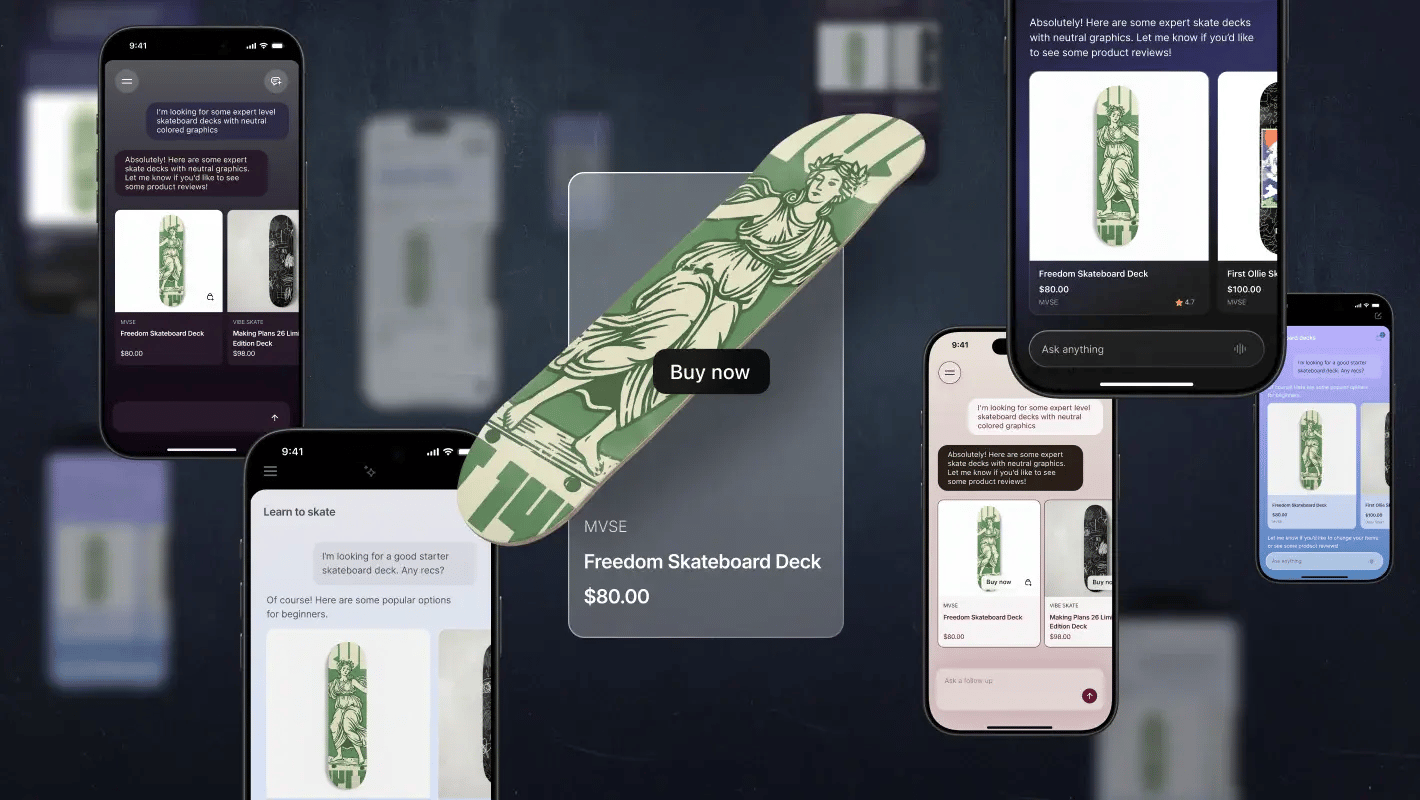
Your products appear in AI chat conversations where customers naturally shop. Platforms include ChatGPT, Microsoft Copilot, Perplexity, with more AI platforms coming.
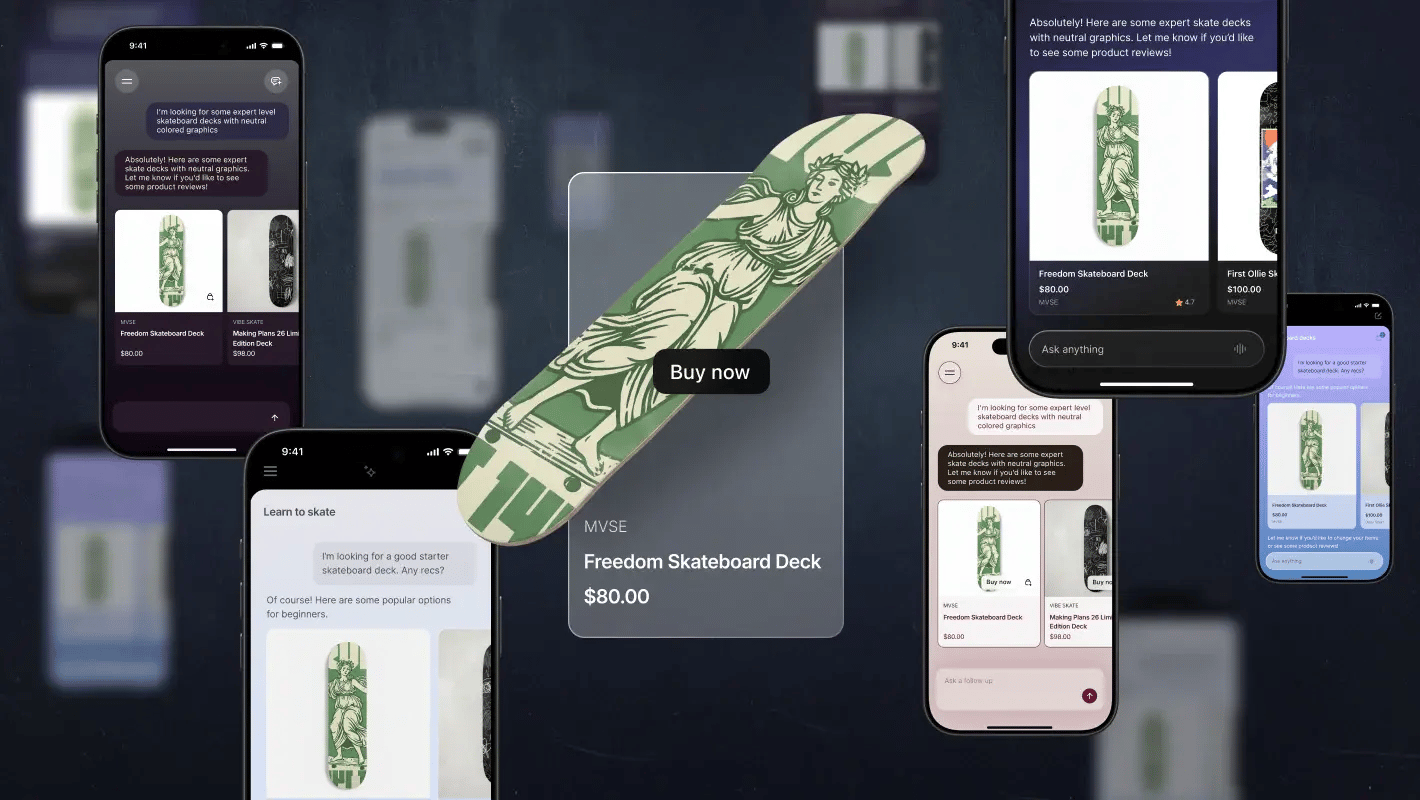
Core Capability:
Organic product discovery in conversational AI interfaces without paid advertising spend.
How It Works
Platform Integration:
- Shopify syndicates product catalog to AI platforms
- AI platforms surface relevant products in conversations
- Users discover products while asking questions
- Purchase flows handled through AI interface
- Merchant manages brand presence and product data
Discovery Mechanism:
- User asks AI platform a question or describes need
- AI identifies relevant products from Shopify merchants
- Products appear in conversational context
- User can browse, ask questions, and purchase
- Natural discovery without search engine queries
Merchant Control:
- Define how brand appears to shoppers in AI platforms
- Manage which products syndicate to AI channels
- Control product information and presentation
- Monitor performance and discovery patterns
Business Impact
New Discovery Channel:
Customers finding products through conversation rather than search. Positions products where customers naturally ask questions and explore options.
Zero Acquisition Cost:
Organic placement in AI conversations. No ad spend required for discovery. Reduces customer acquisition cost dependency.
Conversational Context:
Products appear when contextually relevant to user questions. Higher intent discovery than passive browsing.
First-Mover Advantage:
Early presence in AI commerce positions brand as AI platforms grow. Learning advantage in conversational commerce.
Strategic Considerations
Product Category Fit:
- Categories where customers ask questions before buying
- Complex products benefiting from conversational exploration
- Items typically researched before purchase
- Categories with high consideration and comparison
Brand Positioning:
- How brand communicates in conversational context
- Product information richness and accuracy
- Competitive differentiation in AI recommendations
- Brand guidelines for AI representation
Operational Requirements:
- Product data quality and completeness
- Brand voice guidelines for AI interactions
- Performance monitoring and optimization
- Customer experience consistency across channels
Product Network: Inventory-Free Expansion
What Product Network Does
Surface complementary products from other Shopify merchants in your search results, collections, emails, and post-purchase pages. Earn commission on sales you facilitate without holding inventory.

Core Capability:
Become comprehensive destination for product categories without inventory investment or fulfillment operations.
How It Works
Product Discovery:
- Browse Product Network for complementary offerings
- Select products aligning with your brand and customer needs
- Products appear in your store search and collections
- Maintain brand experience while expanding selection
Customer Experience:
- Customer searches or browses your store
- Network products surface alongside your inventory
- Customer adds items to cart (yours and network products)
- Single checkout experience
- You earn commission on network product sales
Fulfillment:
- Network partner handles inventory and fulfillment
- Customer receives products directly from partner
- You maintain customer relationship
- No inventory risk or fulfillment operations
Revenue Model:
- Commission on network product sales
- No upfront inventory investment
- No fulfillment costs
- Basket size expansion through selection breadth
Business Impact
Category Expansion:
Fill catalog gaps without inventory commitment. Test demand for new categories before investing. Respond quickly to customer requests for complementary products.
Customer Retention:
Keep customers shopping with you even for items outside core offering. Reduce customer departure to competitors for complementary needs.
Basket Size Growth:
Broader selection enables larger basket sizes. Customers find everything they need in single shopping session.
Market Testing:
Validate demand for product categories before inventory investment. Learn customer preferences through network product performance.
Strategic Use Cases
Use Case 1: Specialized Retailer Expanding Reach
Scenario:
Coffee roaster with strong customer relationships. Customers regularly ask for brewing equipment, grinders, and accessories outside current offering.
Product Network Application:
- Surface specialty coffee equipment from partners
- Maintain brand relationship as coffee destination
- Earn commission on equipment sales
- No inventory investment in equipment category
- Test equipment demand before direct sourcing
Use Case 2: Seasonal Business Maintaining Engagement
Scenario:
Ski apparel brand with strong winter sales but limited summer relevance. Customer relationships dormant during off-season.
Product Network Application:
- Surface complementary summer outdoor gear from partners
- Maintain customer engagement year-round
- Earn commission during off-season
- Preserve brand relationship beyond core season
- Test demand for seasonal expansion
Use Case 3: Brand Building Category Authority
Scenario:
Kitchen gadgets retailer positioned as cooking destination. Strong in one category but customers expect comprehensive kitchen offering.
Product Network Application:
- Surface full kitchen product range from partners
- Position as complete cooking destination
- Maintain brand perception as category expert
- Focus inventory investment on core differentiators
- Delegate commodity categories to network
Retail Channel Enhancements
POS Hub: Reliable Retail Hardware
What It Is:
Hardware device providing wired connections for retail peripherals with computer-level processing power. Ensures operational reliability through wired connectivity.
Business Impact:
- Eliminates wireless connectivity issues in retail
- Reliable hardware for mission-critical operations
- Supports POS Hub-compatible scanners and peripherals
- Reduces downtime from connectivity problems
When It Matters:
Retail operations where reliability is critical. High-volume locations where wireless issues costly. Environments with connectivity challenges.
Subscriptions on POS
What It Is:
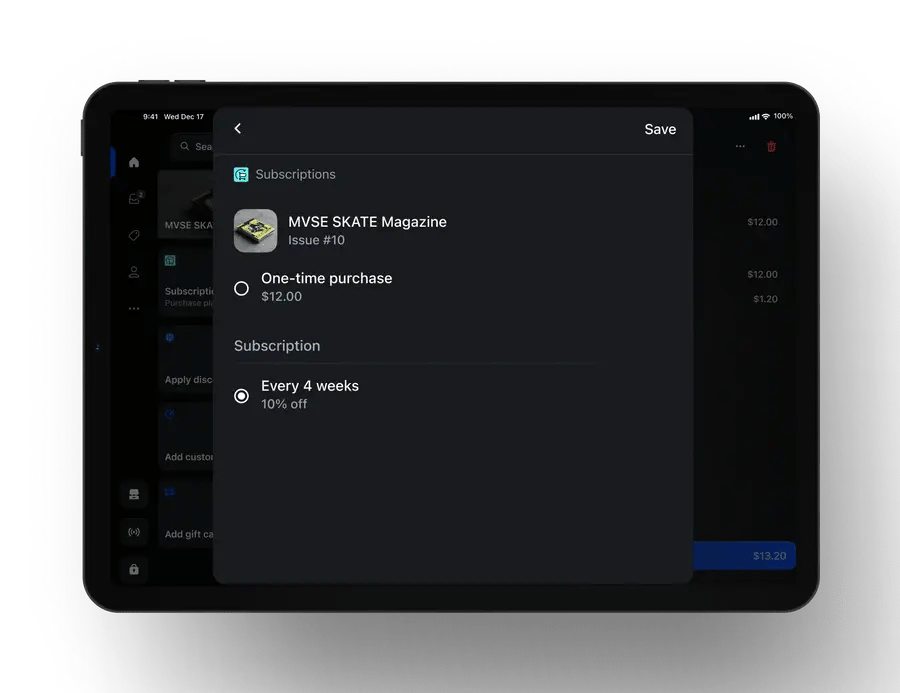
In-store subscription enrollment using Shopify Subscriptions app. Customers sign up for recurring deliveries during retail visit.
Business Impact:
- Converts one-time retail purchase into recurring revenue
- Captures subscription intent at point of discovery
- Bridges retail and online customer relationship
- Staff can explain and enroll subscriptions directly
Use Cases:
- Beauty products with recurring usage patterns
- Food and beverage consumables
- Health and wellness supplements
- Pet supplies and recurring needs
Quick Count for POS
What It Is:
Scan products on sales floor to instantly update inventory counts. Real-time inventory accuracy without full cycle counts.
Business Impact:
- Always-accurate inventory across online and retail
- Prevents overselling and stock discrepancies
- Staff can verify inventory during customer interactions
- Reduces time spent on manual inventory reconciliation
Operational Value:
Unified inventory truth across channels. Customer service accuracy. Reduced inventory shrinkage visibility.
Same-Day Delivery with Uber Direct
What It Is:
Ship-from-store capability with Uber Direct integration. Same-day delivery for online orders fulfilled from retail locations.
Business Impact:
- Compete with major retailers on delivery speed
- Utilize retail inventory for online fulfillment
- Local market delivery without distribution centers
- Revenue from retail inventory to online customers
Strategic Value:
Retail locations become fulfillment nodes. Inventory efficiency across channels. Local delivery competitive advantage.
B2B Commerce Capabilities
ACH Payment Acceptance
What It Is:
Bank transfer payment option for B2B transactions. Direct account-to-account transfers eliminating credit card fees.
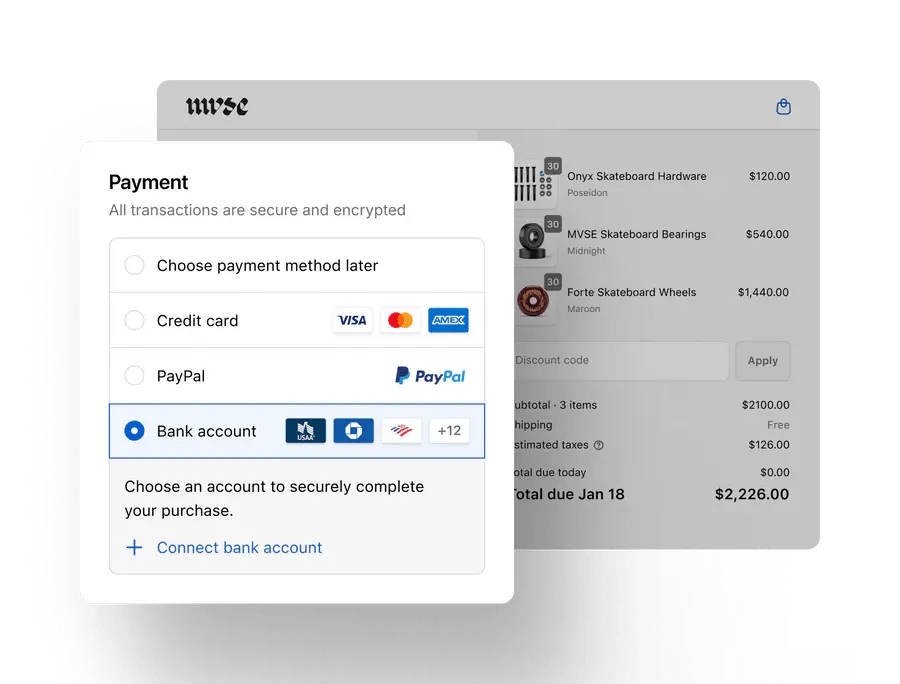
Business Impact:
- Lower transaction costs for large B2B orders
- Preferred payment method for many business buyers
- Reduces payment processing expenses
- Professional payment option for B2B relationships
B2B Fit:
Essential for wholesale operations. Expected by business buyers. Cost savings on high-volume transactions.
Payment Requests Per Shipment
What It Is:
Request payment for each shipment in multi-shipment B2B orders. Aligns payment timing with fulfillment rather than requiring full payment upfront.
Business Impact:
- Cash flow management for large orders
- Reduces buyer payment burden on big purchases
- Professional billing aligned with fulfillment
- Accommodates partial delivery workflows
Use Cases:
- Large wholesale orders fulfilled over time
- Custom manufacturing with phased delivery
- Seasonal orders with staggered shipment
- High-value purchases requiring payment flexibility
Shopify Collective: Global Wholesale Network
What It Is:
Wholesale marketplace connecting brands with retailers across 35 countries. Discover wholesale partners and manage relationships through platform.
Business Impact:
- Access to global retailer network for distribution
- Simplified wholesale partner discovery and vetting
- Unified system for wholesale and DTC operations
- International expansion through retail partnerships
Strategic Value:
Distribution scaling without direct international operations. Retail partnerships expanding market reach. Hybrid DTC and wholesale model.
Global Payment Expansion
Shop Pay Installments in UK
What It Is:
Buy now, pay later option in United Kingdom with terms up to 24 months. Reduces purchase barrier for higher-value items.
Business Impact:
- Increases average order value through financing
- Removes payment barrier for considered purchases
- Competitive checkout experience in UK market
- Conversion improvement on higher-price-point products
Shop Pay with Global-e
What It Is:
International order processing combining Shop Pay's conversion benefits with Global-e's cross-border capabilities.
Business Impact:
- Simplified international expansion
- Localized payment options by market
- Currency and duty handling
- Conversion optimization for international traffic
Klarna Expansion
What It Is:
Klarna buy now, pay later available in 8 additional countries. Expands payment flexibility in new markets.
Business Impact:
- Market-specific payment preferences addressed
- Conversion improvement through familiar payment options
- Competitive checkout experience by geography
- International expansion payment infrastructure
Operational Implications for Stakeholders
Channel Strategy Complexity
Strategic Questions:
- Which channels align with our brand and business model?
- What operational capacity exists for multi-channel management?
- How do we prioritize channel expansion?
- What resources required per channel?
- How do we maintain consistency across touchpoints?
Management Complexity:
- Each channel requires dedicated strategy and oversight
- Customer experience consistency across channels
- Inventory allocation and fulfillment coordination
- Performance monitoring per channel
- Resource allocation across initiatives
Customer Experience Consistency
Cross-Channel Requirements:
- Unified brand voice and visual presentation
- Consistent product information across channels
- Coordinated pricing and promotional strategy
- Seamless customer service regardless of channel
- Integrated customer data and relationship history
Operational Coordination:
- Single customer view across all touchpoints
- Unified inventory management
- Cross-channel order management
- Consistent fulfillment standards
- Integrated loyalty and customer programs
Revenue Attribution
Multi-Touch Journey Complexity:
- Customers discover in AI platform, purchase on website
- Retail visit leads to online subscription
- Product Network introduction drives core product sales
- Wholesale partner expands brand awareness
Attribution Challenges:
- Traditional last-click attribution insufficient
- Channel contribution vs. channel conversion
- Investment decisions across channels
- Performance measurement methodology
Resource Allocation Strategy
Per-Channel Requirements:
- Agentic Storefronts: Product data optimization, AI presence monitoring
- Product Network: Partner selection, customer communication, performance tracking
- Retail: Store operations, staff training, inventory management
- B2B: Relationship management, custom pricing, terms coordination
- International: Market research, localization, payment methods, compliance
Prioritization Framework:
- Channel alignment with core offering
- Revenue potential vs. resource requirement
- Strategic fit with long-term vision
- Operational capacity and expertise
- Competitive positioning considerations
What This Means for Your Business
Channel expansion capabilities in Winter '26 provide revenue diversification and growth opportunities. The strategic question is which channels align with your business model and whether you can manage multi-channel complexity.
Key Considerations:
Revenue Diversification: Multiple channels reduce dependency on single traffic source or acquisition method. Strategic hedge against channel-specific disruption.
Operational Complexity: Each channel requires dedicated strategy, resources, and oversight. Success depends on effective prioritization and capability building.
Competitive Positioning: Early presence in emerging channels (AI platforms) creates first-mover advantage. Multi-channel presence matches customer expectations.
Platform Value: Unified platform across channels simplifies operations vs. separate systems. Single customer data model enables comprehensive view.
Strategic Flexibility: Platform-native channels enable testing and experimentation. Start small, scale what works, abandon what doesn't.
Related Strategic Analyses
- Complete Platform Evaluation: Should You Join Shopify in 2026?
- AI Operations Impact: Business Efficiency Transformation
- Risk-Free Innovation: Testing Strategy with SimGym and Rollouts
Common Questions
What are Agentic Storefronts in Shopify Winter '26?
Agentic Storefronts enable products to appear in AI chat conversations on platforms like ChatGPT, Microsoft Copilot, and Perplexity. Customers shopping conversationally in these AI platforms discover and purchase your products organically without paid acquisition costs.
How does Product Network work?
Product Network allows you to surface complementary products from other Shopify merchants in your search results, collections, emails, and post-purchase pages. You earn commission on sales without holding inventory or managing fulfillment.
What retail capabilities are new in Winter '26?
Winter '26 introduces POS Hub (reliable wired hardware), Subscriptions on POS for in-store enrollment, Quick Count for real-time inventory updates, and Uber Direct integration for same-day delivery from stores.
What B2B features are available?
Winter '26 adds ACH payment acceptance for B2B transactions, payment requests per shipment for multi-shipment orders, and expanded Shopify Collective wholesale network now available in 35 countries.
Which channels should we prioritize for expansion?
Channel prioritization depends on business model, customer behavior, and strategic goals. Assess each channel's alignment with your offering, operational capacity, and revenue potential before expansion.
Do AI platforms cost money to access?
Agentic Storefronts provide organic placement in AI conversations without advertising spend. This is discovery channel, not paid placement. Reduces customer acquisition cost dependency.
What commission does Product Network charge?
Product Network commission structures vary by partner and product category. You negotiate terms with individual network partners based on product type and relationship.
Can we start with one channel and expand later?
Yes. Phased channel expansion is recommended. Master core operations, then add channels progressively. Build capability before scaling complexity.
Do we need separate staff for each channel?
Channel complexity varies. Some channels (Agentic Storefronts) require minimal ongoing management. Others (retail operations) require dedicated staff. Resource requirements depend on channel mix and scale.
How do we maintain brand consistency across channels?
Unified platform enables consistent product data, pricing, and customer information. Brand guidelines, training, and process documentation ensure experience consistency. Agency support helps establish cross-channel standards.
Planning Multi-Channel Expansion?
CLEARgo is a Shopify Plus Partner agency helping businesses across Greater China and Southeast Asia develop channel strategy and implement multi-channel operations.
Channel Strategy Development:
- Multi-channel opportunity assessment for your business
- Channel prioritization based on strategic fit and capacity
- Phased expansion roadmap development
- Resource planning and capability requirements
- Revenue modeling and business case development
- Risk assessment and mitigation planning
Implementation Support:
- Agentic Storefronts optimization and monitoring
- Product Network partner selection and management
- Retail operations setup and staff training
- B2B commerce implementation and processes
- International expansion strategy and execution
- Performance monitoring and optimization
Our clients include: Canon, Haagen Dazs, Estee Lauder, and Sasa across Greater China and Southeast Asia.
Schedule Channel Strategy Consultation | Learn About CLEARgo
Published December 15, 2025 | CLEARgo | Official Shopify Winter '26 Documentation