

AI-Powered: How Shopify Winter '26 Changes Business Efficiency
Published December 12, 2025 | 8 min read | By CLEARgo
Quick Summary: Shopify Winter '26 embeds AI throughout operations via Sidekick, transforming how teams work. Sidekick provides proactive recommendations, generates custom apps through natural language, automates workflows, edits themes conversationally, and creates custom analytics. This analysis helps non-Shopify businesses understand operational implications, resource shifts, and strategic considerations for AI-powered commerce.
AI-powered operations represent a fundamental shift in how commerce teams work. Rather than AI as an add-on tool, Shopify Winter '26 positions AI as an embedded business partner throughout daily operations.
For businesses evaluating Shopify, understanding operational changes helps assess strategic fit and implementation requirements. This guide examines how AI operations affect team structure, process design, and capability requirements.
Context: This is part of a strategic analysis series. See the complete platform evaluation guide for comprehensive assessment.
The Operations Transformation Thesis
Traditional e-commerce platforms add AI through third-party integrations. Winter '26 takes a different approach: AI embedded natively throughout the platform.
Traditional Platform Model
Characteristics:
- Chatbots for customer service
- Separate AI tools for different functions
- Integration complexity across multiple vendors
- Data silos between platform and AI tools
- Manual coordination between systems
Resource Impact: Teams manage multiple AI subscriptions, maintain integrations, and coordinate data across disconnected systems.
Winter '26 AI-Native Model
Characteristics:
- Single AI partner (Sidekick) across operations
- Conversational interface for multiple functions
- Unified data model for AI learning
- Platform-native integration eliminates tool sprawl
- AI proactively suggests actions based on business context
Resource Impact: Teams work conversationally with AI for custom tools, automation, analysis, and execution rather than managing separate systems.
Sidekick: AI Business Partner Capabilities
1. Sidekick Pulse: Proactive Recommendations
What It Does:
Sidekick Pulse analyzes your store data combined with market trends to deliver personalized recommendations and next steps for your business.
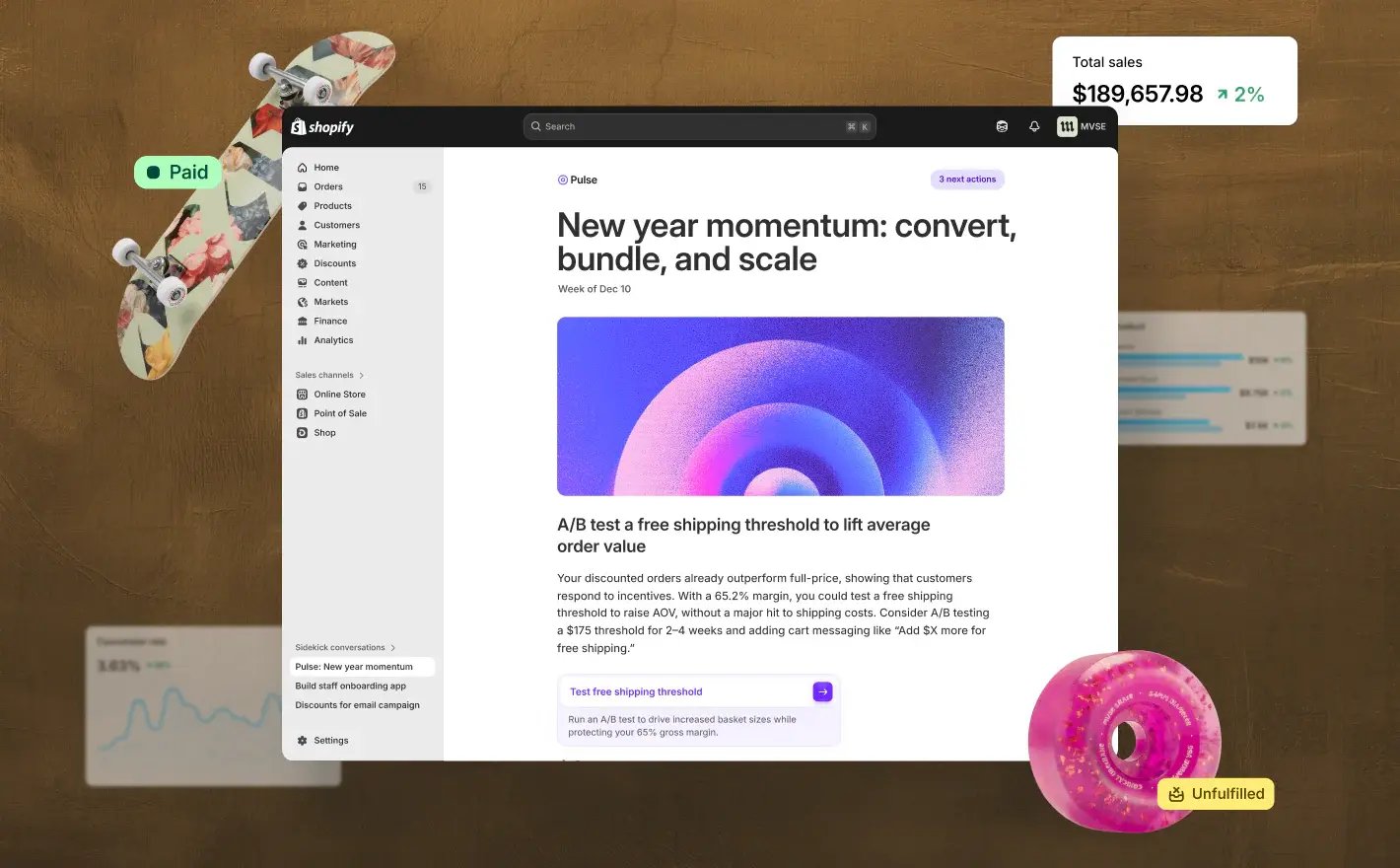
How It Works:
- Monitors store performance metrics continuously
- Compares your data against market trends
- Identifies opportunities and potential issues
- Surfaces actionable recommendations proactively
- Suggests specific next steps based on business context
Business Impact:
Rather than manually reviewing dashboards, teams receive AI-driven insights highlighting what matters most. This shifts analytics from reactive reporting to proactive opportunity identification.
Operational Change:
Teams spend less time in data analysis and more time acting on AI-surfaced insights. This requires trust in AI recommendations and process for evaluating suggested actions.
2. Custom App Generation
What It Does:
Describe a custom admin app in plain language, and Sidekick builds it. This democratizes internal tool creation without developer resources.
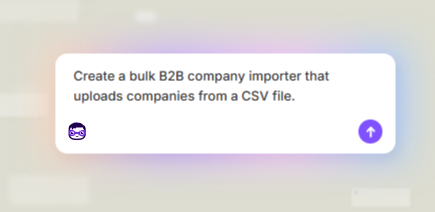
How It Works:
- Describe the business need conversationally
- Sidekick generates custom admin app code
- App appears in Shopify admin interface
- Modify app by describing desired changes
- No coding knowledge required
Example Use Cases:
- Custom inventory management views for specific workflows
- Order processing tools tailored to business rules
- Customer data displays matching team needs
- Reporting dashboards for specific metrics
- Internal workflow management tools
Business Impact:
Teams can create bespoke tools matching exact business processes without developer hiring or external development costs. This particularly benefits businesses with unique operational needs.
Operational Change:
Reduces dependency on development resources for internal tools. Shifts capability to operations teams. Requires effective communication of business needs and testing of generated apps.
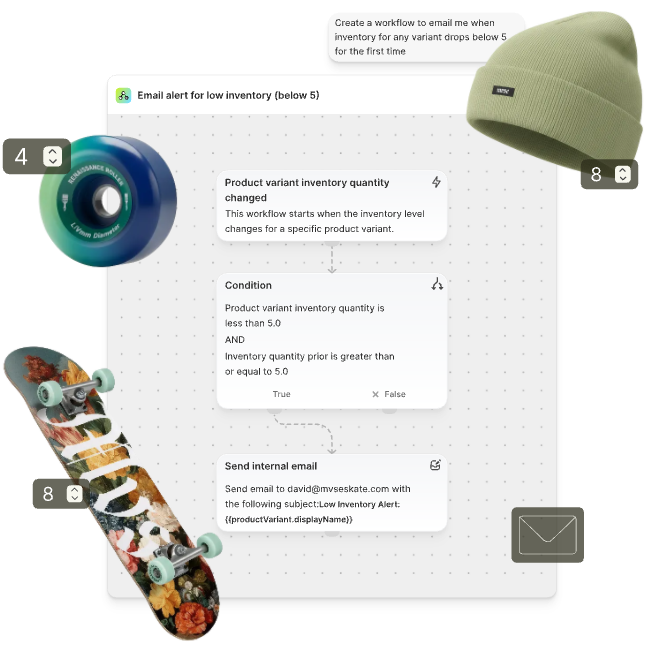
3. Flow Automation via Conversation
What It Does:
Describe a workflow in natural language, and Sidekick builds it in the Shopify Flow automation app.
How It Works:
- Explain the workflow you need conversationally
- Sidekick translates into Flow automation logic
- Workflow deploys in Shopify Flow automatically
- Modify workflows through conversation
- No Flow app expertise required
Example Workflows:
- "When high-value customer places order, notify VIP team and apply expedited shipping"
- "If inventory falls below threshold, create purchase order and alert supplier"
- "When customer submits return, generate label and notify warehouse"
- "If product review below 3 stars, flag for quality team review"
Business Impact:
Automation becomes accessible to operations teams without technical Flow expertise. Complex multi-step workflows can be created and modified quickly.
Operational Change:
Lowers barrier to automation adoption. Teams can automate processes as they identify opportunities rather than waiting for technical resources. Requires workflow design thinking and testing methodology.
4. Theme Editing Through Natural Language
What It Does:
Tell Sidekick specific theme updates needed, and it generates the code changes.
How It Works:
- Describe desired design changes conversationally
- Sidekick generates theme code modifications
- Changes apply to store theme
- Iterate through conversation until desired result
- No theme coding knowledge required
Example Requests:
- "Make the Add to Cart button larger and change color to red"
- "Add urgency timer showing when sale ends"
- "Display trust badges below product price"
- "Change homepage hero section layout"
Business Impact:
Reduces dependency on designers and developers for theme modifications. Enables rapid testing of design variations. Accelerates implementation of merchandising ideas.
Operational Change:
Merchandising and marketing teams can implement design ideas directly. Shortens time from concept to live testing. Requires design QA process and brand consistency guidelines.
5. Custom Analytics and Data Visualization
What It Does:
Ask for specific data analysis or custom reports, and Sidekick generates visualizations and insights.
How It Works:
- Ask analytical questions in natural language
- Sidekick analyzes relevant store data
- Generates custom reports and visualizations
- Provides insights and recommendations
- Create ongoing monitoring dashboards
Example Queries:
- "Show me conversion rate by traffic source last 30 days"
- "Which products have highest return rates and why"
- "Customer lifetime value by acquisition channel"
- "Inventory turnover by category compared to last year"
Business Impact:
Data analysis becomes conversational. Teams get answers to specific business questions without analyst resources or BI tool expertise.
Operational Change:
Democratizes data access across organization. Shifts from scheduled reports to on-demand analysis. Requires data literacy and critical evaluation of AI insights.
6. Multi-Step Task Completion
What It Does:
Assign complex, multi-step tasks to Sidekick, which plans and executes across multiple functions.
How It Works:
- Describe complex task with multiple steps
- Sidekick breaks down into subtasks
- Executes across relevant platform functions
- Provides progress updates and final summary
- Handles tasks spanning multiple areas
Example Tasks:
- "Prepare store for Black Friday sale: update theme, create discount codes, set up email campaign, adjust inventory"
- "Launch new product line: create collection, write descriptions, set up cross-sells, configure shipping"
- "Analyze Q4 performance and create improvement plan for Q1"
Business Impact:
Complex projects that traditionally require coordination across multiple people or tools can be delegated to AI for initial execution.
Operational Change:
Teams can focus on strategy and oversight while AI handles tactical execution. Requires clear task definition and verification of AI work.
7. Skills System: Reusable Prompts and Knowledge
What It Does:
Create and share reusable prompt templates (Skills) that encode business knowledge and best practices.
How It Works:
- Create custom Skills for repeated tasks
- Include business context and requirements
- Share Skills across team members
- Maintain consistency in AI interactions
- Build organizational AI knowledge base
Example Skills:
- Product description template matching brand voice
- Weekly analytics report format
- New product launch checklist workflow
- Customer inquiry response guidelines
Business Impact:
Standardizes AI interactions across team. Captures and shares best practices. Ensures consistent outputs matching business requirements.
Operational Change:
Creates organizational memory for effective AI use. Requires investment in Skills development and governance for quality control.
What This Means for Your Business
AI operations in Winter '26 represent a fundamental capability shift. The strategic question is not whether AI can augment operations, but whether your organization can effectively adopt AI-assisted work models.
Key Considerations:
Resource Allocation: AI operations reduce need for specialized technical resources but require investment in training and change management.
Speed of Execution: Organizations gain capability to execute faster, but must adapt decision-making and strategy cycles to leverage speed advantage.
Technical Requirements: AI lowers technical barriers for operations teams but raises requirements for strategic AI use and verification skills.
Competitive Positioning: Early AI adopters gain execution speed and capability advantages. Delayed adoption creates competitive gap.
Implementation Complexity: Technical implementation is straightforward. Organizational adoption determines success.
Related Strategic Analyses
- Complete Platform Evaluation: Should You Join Shopify in 2026?
- Risk-Free Innovation: Testing Strategy with SimGym and Rollouts
- Revenue Expansion: New Sales Channels in Winter '26
Common Questions
What is Sidekick in Shopify Winter '26?
Sidekick is an AI business partner that provides proactive recommendations, generates custom admin apps through natural language, automates workflows in Shopify Flow, edits themes conversationally, and creates custom analytics reports. It uses market trends and store data to deliver personalized insights.
How does AI-powered operations change business efficiency?
AI operations enable teams to build custom tools without developers, automate complex workflows through conversation, analyze data instantly, and execute multi-step tasks with AI planning. This shifts resource allocation, accelerates decision-making, and changes team structure requirements.
Do I need technical skills to use Sidekick?
Sidekick uses conversational interfaces that reduce technical barriers. You describe what you need in natural language, and Sidekick builds apps, creates workflows, or edits themes. However, strategic planning and effective prompt design benefit from training or agency guidance.
What operational changes happen with AI-powered commerce?
Operations shift from manual execution to AI-assisted work. Teams can create custom tools conversationally, automate repetitive workflows, get instant data analysis, and complete complex tasks faster. This requires process redesign, staff training, and change management planning.
Is AI operations right for small teams?
AI operations particularly benefit small teams by providing capabilities typically requiring developers, analysts, or designers. Teams can scale operations without proportional headcount growth. Success requires AI adoption readiness and willingness to redesign processes.
How long does AI operations training take?
Basic Sidekick training requires one to two weeks. Function-specific training spans weeks three to four. Advanced capabilities and Skills development continue through months two to three. Ongoing learning and best practice sharing should be continuous.
Can we start small and expand AI usage over time?
Yes. Many businesses start with pilot departments or specific functions, demonstrate value, then expand organization-wide. This approach reduces risk, builds internal expertise, and allows process refinement before scaling.
What if our team resists AI adoption?
Resistance is common and addressable through change management. Frame AI as augmentation not replacement, demonstrate quick wins, celebrate early adopters, provide comprehensive support, and address concerns transparently. Success depends on leadership commitment to adoption.
Do we need to redesign all processes for AI?
Not immediately. Start with highest-impact processes or pain points. Gradually expand AI usage as team comfort and capability grow. Complete transformation is evolution, not single event.
Should we use agency support for AI operations implementation?
Agency support helps with strategic planning, training program design, change management, and best practice guidance. Self-implementation works for businesses with strong internal capability and simpler requirements. Most businesses benefit from initial strategic guidance then ongoing self-management.
Evaluating AI Operations for Your Business?
CLEARgo is a Shopify Plus Partner agency helping businesses across Greater China and Southeast Asia assess AI readiness and implement AI-powered operations.
AI Operations Assessment:
- Operational readiness evaluation for AI adoption
- Process audit identifying automation opportunities
- Custom capability requirements and Sidekick fit analysis
- Training program design for organizational capability building
- Change management strategy for successful adoption
- Implementation roadmap with phased approach
Implementation Support:
- Sidekick strategic use planning
- Custom app development guidance
- Workflow automation design
- Skills library development
- Team training and ongoing support
- Best practice guidance for effective AI use
Our clients include: Canon, Haagen Dazs, Estee Lauder, and Sasa across Greater China and Southeast Asia.
Schedule AI Operations Consultation | Learn About CLEARgo
Published December 12, 2025 | CLEARgo | Official Shopify Winter '26 Documentation